
At 5am on a Monday, while the rest of Covent Garden is dark, the antiques traders of Jubilee Market are already setting out silver, brass and old prints, because their market day officially runs from 5am to 5pm according to the published schedule. Nothing else in this part of the West End starts so early, and nothing better illustrates the point of this article, which is that the district's markets are not one market but 3, and the day of the week decides what every stall sells. The Apple Market inside the Market Building, the East Colonnade Market along its east side, and Jubilee Market by the square's southern corner in WC2 each run their own weekly rotation, and a visitor who wants handmade jewellery will have a completely different morning from one hunting Victorian teaspoons. The rotation, verified on 7 September 2026, is set out below.
Which market runs on which day
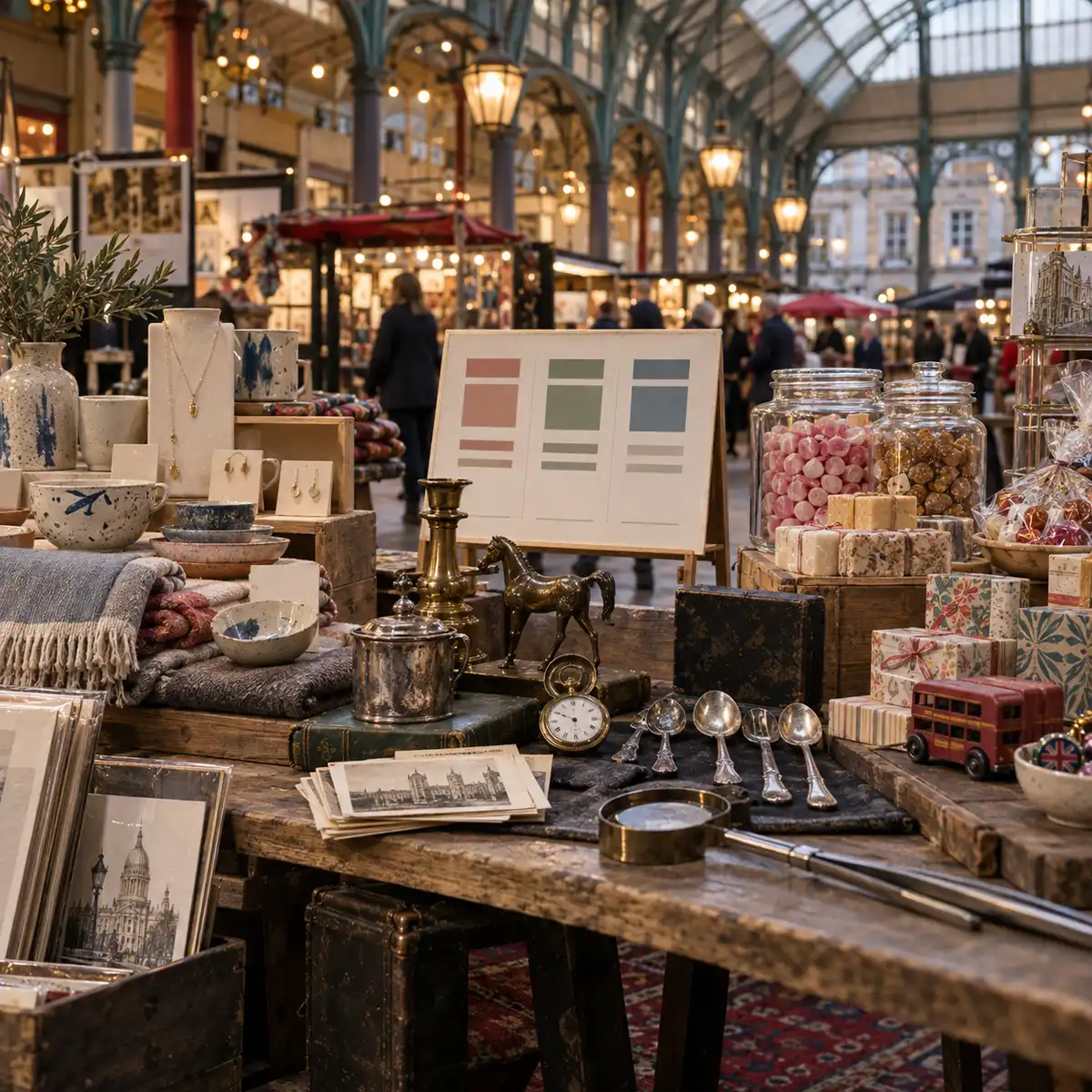
The Apple Market sells handmade craft, jewellery, prints and design from Tuesday to Sunday, and switches entirely to antiques and collectables every Monday, per the estate's published market pages checked on 7 September 2026. Jubilee Market rotates 3 ways, with antiques on Mondays from 5am to 5pm, a general market from Tuesday to Friday from 10.30am to 7.30pm, and arts and crafts at weekends. The East Colonnade Market trades daily with soaps, sweets, jewellery and gifts. Those 3 schedules are the entire system, and every planning decision follows from them. Monday is the antiques day across the board, midweek gives the fullest handmade offer at the Apple Market alongside Jubilee's general stalls, and the weekend brings Jubilee's own makers out while the crowds peak. Hours drift with the seasons and bank holidays, so the estate's and the markets' own pages are worth a glance on the morning itself, but the weekly pattern above has held steady across recent published schedules. One caution on Sundays applies across the district, since several published sources give shorter Sunday hours for the Market Building and its stalls, and the safest assumption is a later start and an earlier finish than the rest of the week.
A market morning walked in order
Begin the route at Jubilee Market as early as you can reasonably manage on a Monday, since the antiques trade there has been under way since 5am and dealers do their own buying in the first hours, when the interesting pieces move. The hall sits by the southern corner of the square, beside the London Transport Museum. Cross the Piazza to the Market Building for mid-morning, when the Apple Market's Monday antiques stalls are fully set out under the 19th-century iron and glass roof, and the aisles are still comfortable. Work along the East Colonnade Market next, on the building's east side, where the daily stalls lean towards soaps, sweets and small gifts. By late morning the pedestrianised square is filling and the licensed street performance pitches draw standing crowds, which is the reliable signal to have finished your browsing and moved on to lunch. On any other day of the week, run the same route in the same order and simply swap antiques for handmade goods in your expectations.
Apple Market against Jubilee on what you will find
Judged on provenance, price range and atmosphere, the 2 main markets serve different shoppers. The Apple Market's weekday stalls centre on work sold by its makers, with jewellery, textiles, watercolours and prints where the person behind the table can usually explain how a piece was made, and prices sit accordingly above souvenir level. Jubilee Market is broader and cheaper across its Tuesday to Friday general days, with souvenirs, clothing, plants and household goods dominating, and its reputation among reviewers is candid about that mix; the same hall then changes character completely for the weekend arts and crafts days and the Monday antiques day. On atmosphere, the Apple Market borrows the grandeur of the Market Building, while Jubilee runs closer to a traditional London market hall, brisker and less polished. A shopper after a piece of handmade British work should default there from Tuesday to Sunday, and a bargain hunter or antiques browser should aim for Monday, when both markets point the same way.
Where the 3 markets actually sit
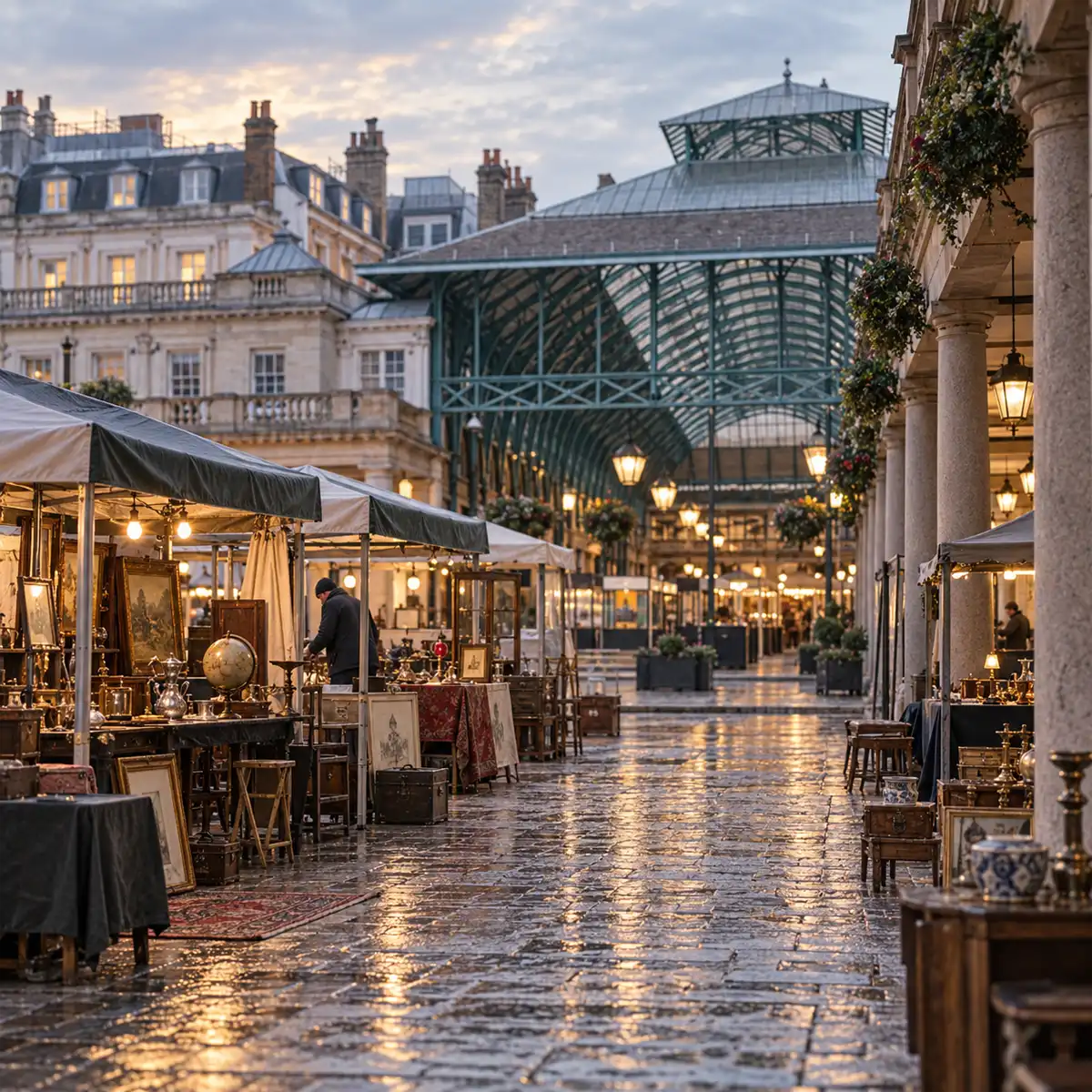
The Apple Market occupies the central aisles of the Market Building on the Piazza, the East Colonnade Market runs along that building's east side, and Jubilee Market stands in its own hall by the square's southern corner, next to the London Transport Museum. All 3 sit within the pedestrianised area, on the Westminster side of a district that also crosses into the London Borough of Camden north of Long Acre. The distinction matters because plenty of visitors browse the Apple Market, assume they have seen the market, and leave without crossing the 50-odd metres of open square to Jubilee, which on the right day holds exactly what they came for. The covered aisles also make this the district's best wet-weather shopping, since all 3 trade under roofs, and a rainy Monday spent moving between the 2 antiques floors is one of central London's more pleasant free mornings. Entry to all 3 costs nothing, which still surprises visitors who assume a landmark square must charge for something.
Getting there and timing the crowds
Reaching the markets is a choice between stations rather than a walk across town. Covent Garden station on the Piccadilly line lands closest, at the corner of Long Acre and James Street, but it relies on lifts and is not step free, so Leicester Square, a short walk along Cranbourn Street and Long Acre, is the smoother arrival for most people, with Charing Cross and Embankment serving the southern approach past Maiden Lane. On timing, a guide published in October 2025 advises arriving before 11am or after 4pm for calmer aisles, which matches the pattern any regular will confirm; weekend afternoons are the crush, weekday mornings the calm. December compresses everything once the festive programme begins. Traders set their own hours within the published windows, so a stall-by-stall completeness is never guaranteed early or late, and the estate's pages carry the current headline times. Buying at the stalls is ordinary retail, with card payments now standard, and haggling belongs to the Monday antiques floors rather than the craft aisles, where prices reflect the maker's time and are treated accordingly.
Fun fact: The square all 3 markets share was laid out by Inigo Jones in the 1630s as London's first planned public square.
The decision this piece settles is which day to come. Come on a Monday for antiques, when Jubilee opens at 5am and the Apple Market turns over its aisles to collectables, midweek for the fullest handmade offer with room to move, and the weekend only if atmosphere outranks elbow room in your priorities. Check the published hours on the day you travel, arrive before 11am, and start at whichever hall matches your shopping rather than the first one you see. Do that and the Apple Market, the East Colonnade and Jubilee Market stop blurring into one and become 3 distinct mornings, each worth its own visit to Covent Garden.